Private label protein drinks become commercially ready through a chain of decisions, not through one attractive sample. A beverage can taste acceptable at the bench yet fail after a scale change, sit poorly in its package, miss a destination-label requirement, or arrive without the records a U.S. buyer needs to receive and release it.
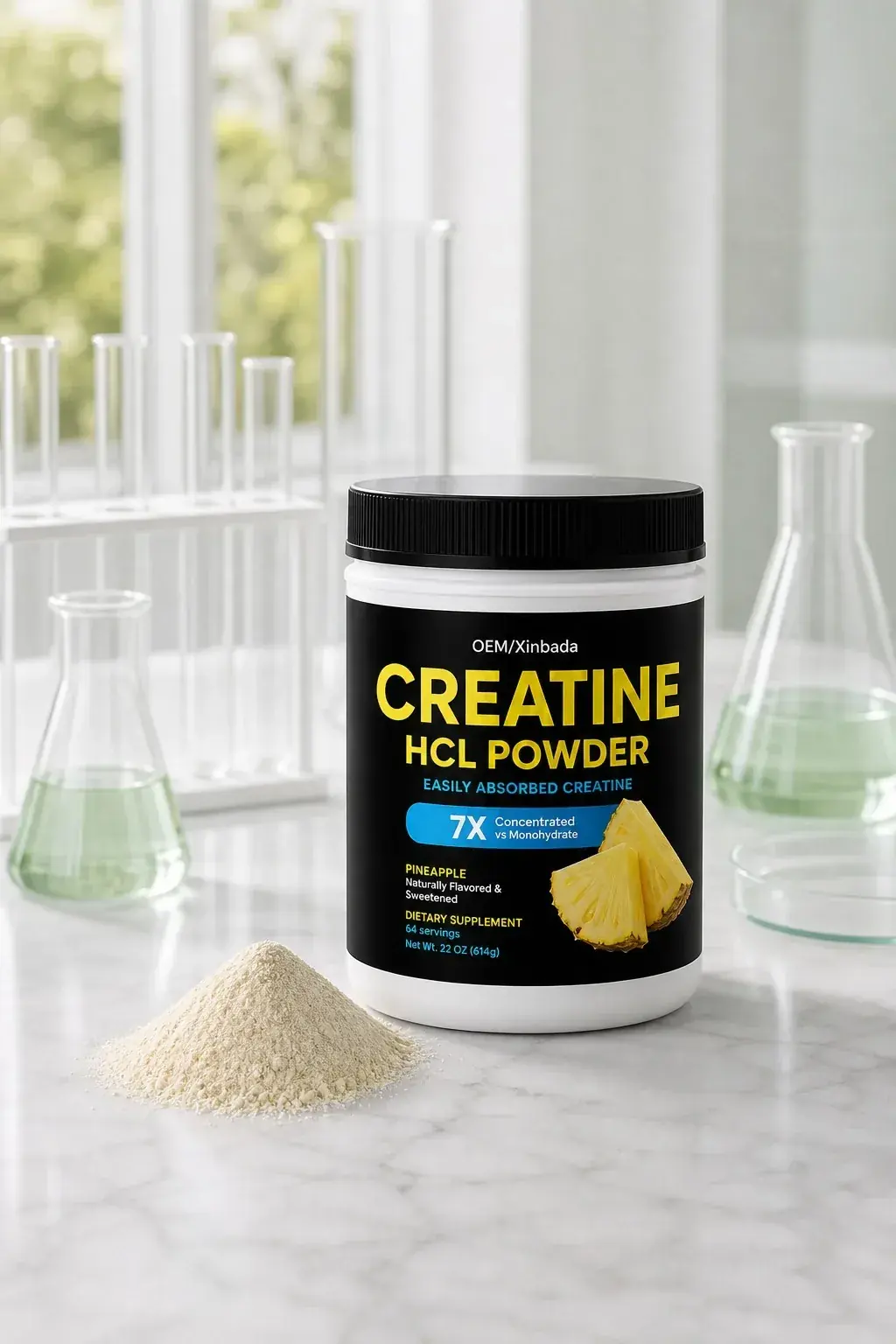
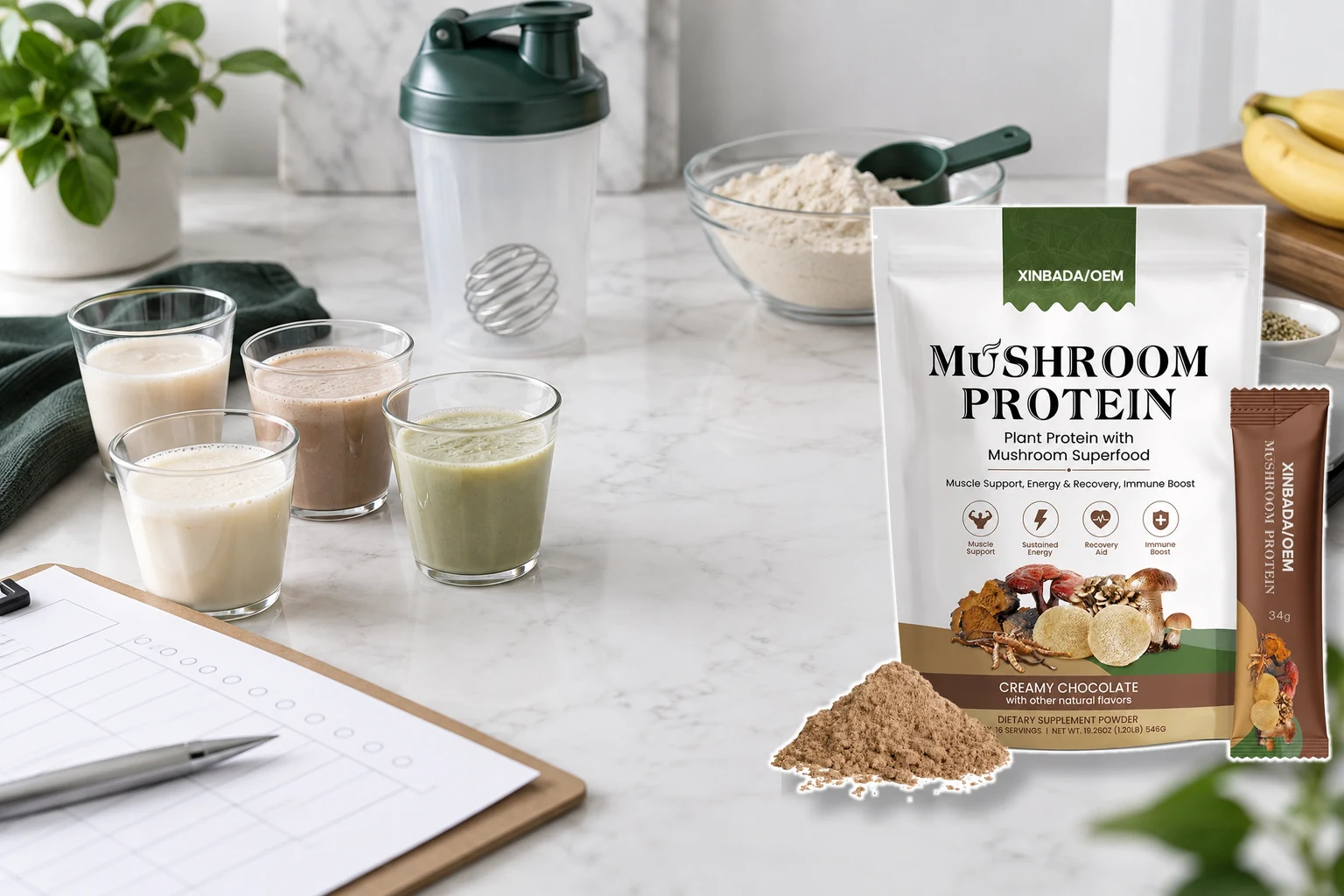
This guide is for procurement teams, wholesalers, traders, and brand owners evaluating a powder-to-mix or ready-to-drink concept. The same-site product image shown here is a mushroom protein powder package used only as product-family context. It does not establish the composition, format, performance, claims, or compliance status of a proposed beverage.
Start With The Commercial Use Case, Not A Flavor Name
The first decision is what the customer will actually prepare, carry, store, and buy again. A powder-to-mix product, a single-serve sachet, and a shelf-stable liquid can all be called a protein drink, but their development paths are materially different. The buyer should define who uses it, how it is prepared, the serving occasion, expected sensory profile, selling channel, storage conditions, target shelf life, and destination before requesting a quotation.
Freeze The Format Boundary
Write a one-page formula brief that distinguishes requirements from preferences. Required items may include protein source, serving quantity, allergen exclusions, sweetener constraints, flavor direction, preparation method, package size, and target market. Preferences can be ranked so the team knows what may change when cost, stability, or ingredient availability creates a tradeoff.
Define Acceptance In Observable Terms
Replace “smooth,” “clean,” or “premium” with a comparison method. For powder, specify water temperature, liquid volume, mixing device, mixing time, standing time, visible sediment, foam, aroma, sweetness, aftertaste, and serving appearance. For a liquid format, include phase separation, viscosity range, package interaction, thermal process, and storage checkpoints. The method matters because two teams can reach opposite conclusions from the same sample when preparation is uncontrolled.
Translate Nutrition And Sensory Goals Into A Controlled Baseline
Protein quantity is only one part of the system. Source, flavor load, sweetener, fat, fiber, stabilizers, minerals, particle behavior, and processing conditions can change taste, mouthfeel, mixing, color, and stability. Buyers should request a controlled version identifier and ingredient statement for each evaluated sample so feedback applies to a known baseline rather than to an informal flavor name.
Review Tradeoffs Before Requesting Perfection
A higher protein target can increase thickness, chalkiness, settling, or flavor-masking difficulty. A simpler ingredient declaration may reduce the tools available for texture and stability. A lower-cost blend can change supply risk or sensory performance. The development record should capture the decision, the evidence considered, who approved it, and what downstream test must be repeated.
Separate Product-Family Evidence From Project Evidence
The site's mushroom protein product page shows a current powder family and package formats. It does not prove that a new concept uses the same formula, ingredients, claims, process, or shelf-life basis. Project evidence should identify the exact sample revision, approved specification, test conditions, and destination package.
Use A Pilot Gate Before Committing To Commercial Volume
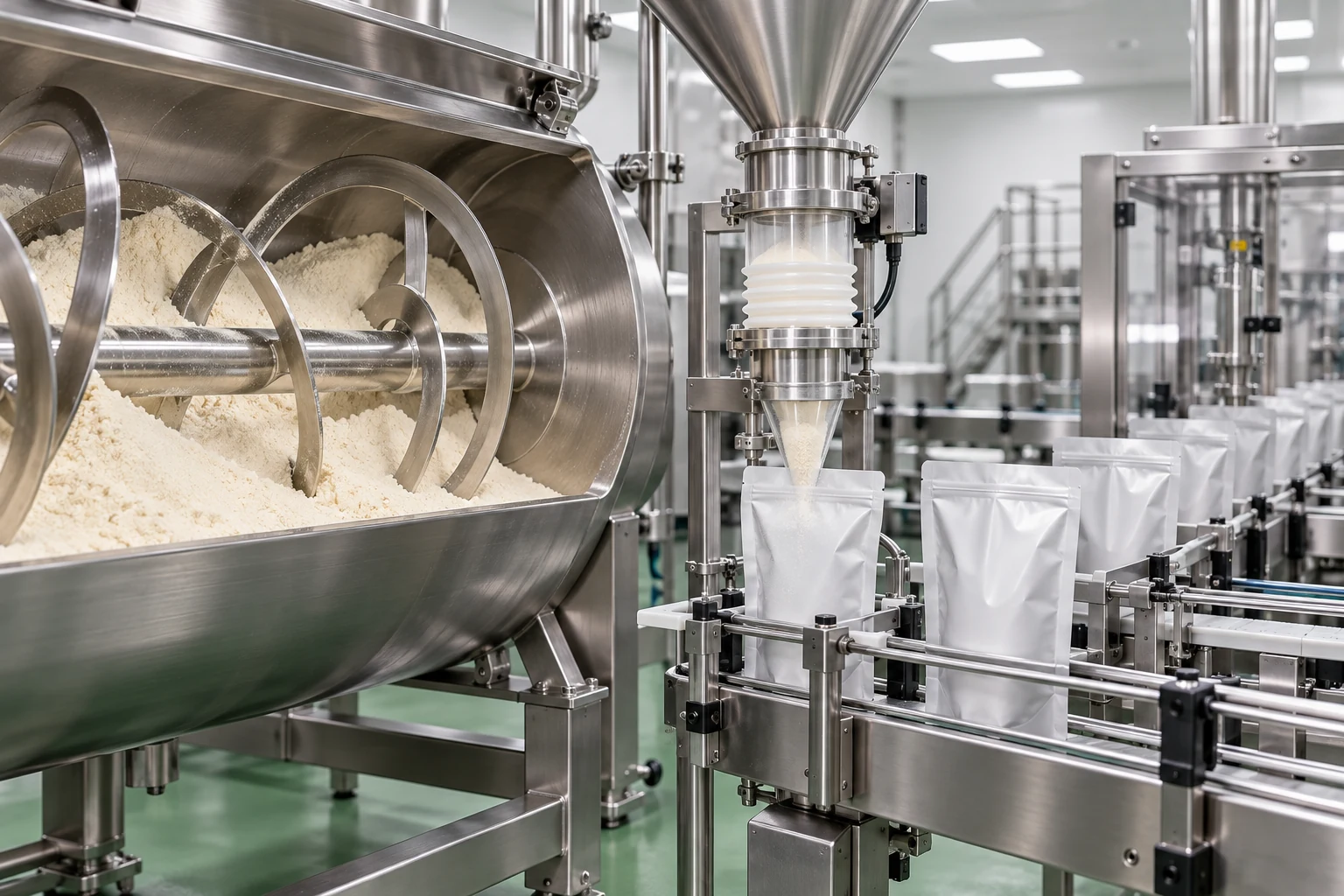
A bench sample answers whether a direction is promising. It does not answer whether the process is repeatable at manufacturing scale. The project plan should include an agreed pilot batch with recorded ingredient lots, sequence, mixing time, temperature, hold time, yield, packaging conditions, samples, deviations, and results. The buyer should understand which equipment and scale differ from the eventual commercial line.
Predefine The Scale-Up Questions
Ask where powder may bridge, dust, clump, or segregate; how liquids are added; what order prevents local overconcentration; how rework is handled; and what in-process checks control uniformity. For a liquid beverage, review heat transfer, shear, deaeration, filling, closure, and process authority responsibilities. For powder, review sieve controls, blending uniformity, fill-weight control, seal quality, and moisture protection.
Make A Failed Pilot Useful
Pass/fail criteria should be set before the run. If the batch misses a target, record the actual result, containment, technical hypothesis, proposed change, and retest scope. A pilot should not be reclassified as successful because material is expensive. The value is a traceable learning cycle that reduces the chance of discovering the same failure in a sellable order.
Qualify The Package As Part Of The Product
The package controls oxygen, moisture, light, leakage, dosage, transport damage, preparation convenience, and the information the buyer presents to the customer. Packaging compatibility should be evaluated with the intended formula, process, closure, storage condition, and distribution route rather than inferred from a similar SKU.
Lock The Complete Pack Specification
Record material structure, barrier target, dimensions, seal window, closure, scoop or sachet, net quantity, case count, pallet pattern, coding location, artwork revision, and inspection standard. Confirm how printed materials are approved, counted, segregated, and destroyed after a revision. A beautiful mockup is not a specification and cannot resolve a line or warehouse dispute.
Plan transport and shelf-life work around credible conditions: heat, humidity, vibration, stacking, repeated opening, and consumer preparation. Define checkpoints and failure criteria. “No visible change” is weak evidence unless the observation method, sample quantity, storage history, and decision owner are known.
Build The Label And Claim Review Into Development
For the U.S. market, the buyer should assign responsibility for identity statements, ingredient declarations, allergen information, Nutrition Facts, net quantity, business identity, directions, warnings where relevant, and any claim substantiation. FDA labeling resources were reviewed for current context, including allergen and Nutrition Facts materials, but a project still needs competent destination-specific review.
Control Every Statement That Changes The Formula
A label claim review is not a final artwork proofreading task. Protein, nutrient, structure/function, “free from,” natural, plant-based, or sustainability language may require evidence and can affect ingredient selection, serving size, testing, and record retention. Marketing, technical, regulatory, and supplier teams should review the same dated claim list before artwork is frozen.
Manage Supplier And Import Responsibilities Explicitly
The FDA's co-manufacturer supply-chain guidance and foreign supplier verification materials illustrate why roles and records must be allocated rather than assumed. The buyer should identify who approves suppliers, verifies specifications, reviews changes, controls records, handles deviations, releases finished goods, and supports an investigation. This article does not determine whether a specific rule applies to a specific transaction.

Compare Quotations On The Same Decision Basis
Unit price cannot be compared until scope is normalized. Ask each manufacturer to state formulation status, development work, ingredient assumptions, package format, printed-material minimums, production minimum, yield basis, testing, samples, freight boundary, payment terms, lead-time assumptions, change control, document set, and ownership of excess packaging.
| Decision Gate | Evidence To Request | Common Failure | Buyer Action |
|---|---|---|---|
| Use case | Approved brief and preparation method | Sample feedback uses different conditions | Freeze must-haves and test method |
| Formula | Versioned composition and specification | Tradeoffs are hidden in a flavor name | Approve a controlled baseline |
| Scale-up | Pilot record, yield, checks, deviations | Bench success is treated as line proof | Set pilot pass criteria in advance |
| Package | Material, seal, code, transit evidence | Mockup replaces technical approval | Qualify the intended package system |
| Label | Claim list, review record, artwork revision | Late text change alters requirements | Review claims before artwork freeze |
| Release | Lot map, results, authorization, change status | Documents cannot be tied to shipment | Define the commercial release pack |
The OEM/ODM overview and partnership page provide current same-site capability context. A quotation should still state exactly which development, testing, packaging, and release activities are included for the proposed SKU.
The site's buyer article library can help a team compare related specification, supplier, and release questions without treating general guidance as project proof. For private label protein drinks, the RFQ should remain the controlled record of scope, assumptions, exclusions, and required evidence.
Release The First Order As A Controlled Commercial Test
The first commercial batch should have enhanced review. Reconcile approved formula revision, raw-material changes, production record, yield, in-process checks, finished results, package and artwork revision, lot code, quantity, retains, shipment condition, and remaining shelf life. Define what blocks shipment and who may approve a documented deviation.
Preserve The Baseline After Launch
Change control should cover ingredient source, manufacturing site, process, specification, method, package, artwork, shelf-life basis, and subcontracted work. Define notice periods, evaluation evidence, sample needs, first-changed-lot identification, and approval authority. Trend complaints, returns, preparation questions, sensory drift, leakage, and document errors against lot and revision rather than treating them as isolated customer-service events.

Frequently Asked Questions
Should A Buyer Choose Powder Or Ready-To-Drink First?
Yes. Format affects formulation, processing, packaging, testing, freight, shelf life, minimum order, and capital exposure. Do not ask suppliers to price both as though the development path were interchangeable.
Is An Approved Bench Sample Enough To Place A Large Order?
No. It is evidence of a direction under stated conditions. Scale-up, package, label, release, and shipping evidence are separate gates.
How Many Samples Should Be Evaluated?
There is no universal number. Use enough controlled iterations to resolve material decisions, then stop changing variables and test the approved baseline. More unlabeled samples can create confusion rather than confidence.
What Should Be Sent In An Initial RFQ?
Send the format, user, preparation method, target market, must-have formula constraints, sensory direction, serving and package, forecast, order range, launch timing, testing expectations, and decision process. Mark assumptions and open questions.
When evaluating private label protein drinks, send a controlled project brief through the site's contact channel. Request a versioned response covering formula, pilot, package, label, scale-up, release evidence, and the decisions that remain open before a commercial commitment.