Whey protein powder manufacturers should be assessed by who controls each production handoff, from dairy ingredients to finished packs. Start with a process map, named locations and evidence that quality reviewers can stop release. A catalogue alone cannot establish that one company performs every operation.
Identify Which Manufacturing Operations Are Actually Offered
First establish whether the proposed company makes the dairy ingredient, blends a formula, packs bulk powder or coordinates subcontractors. All can be legitimate roles, but each needs different evidence. Treating them as identical factories hides where materials and records change hands.
Separate Dairy Processing From Formula Blending
A dairy processor makes an ingredient; a blender combines purchased ingredients into a recipe; a packer may receive an already completed blend. Mark each operation as internal, outsourced or excluded, naming its site and responsible organization. One group-company name is insufficient.
A whey isolate ingredient specification does not establish the composition of a flavored finished powder. Confirm the dairy input and the finished recipe separately, including the basis on which protein content is reported.
Treat A Product Portfolio As A Starting Point
A broad catalogue can reveal formats and commercial positioning, but it is not a manufacturing capability audit. The current Xinbada product catalogue includes several protein families. Its plant-based mushroom protein listing is useful evidence of a displayed protein-powder offer, not evidence that the product contains whey. A specific whey formula, ingredient source and manufacturing route need separate confirmation.
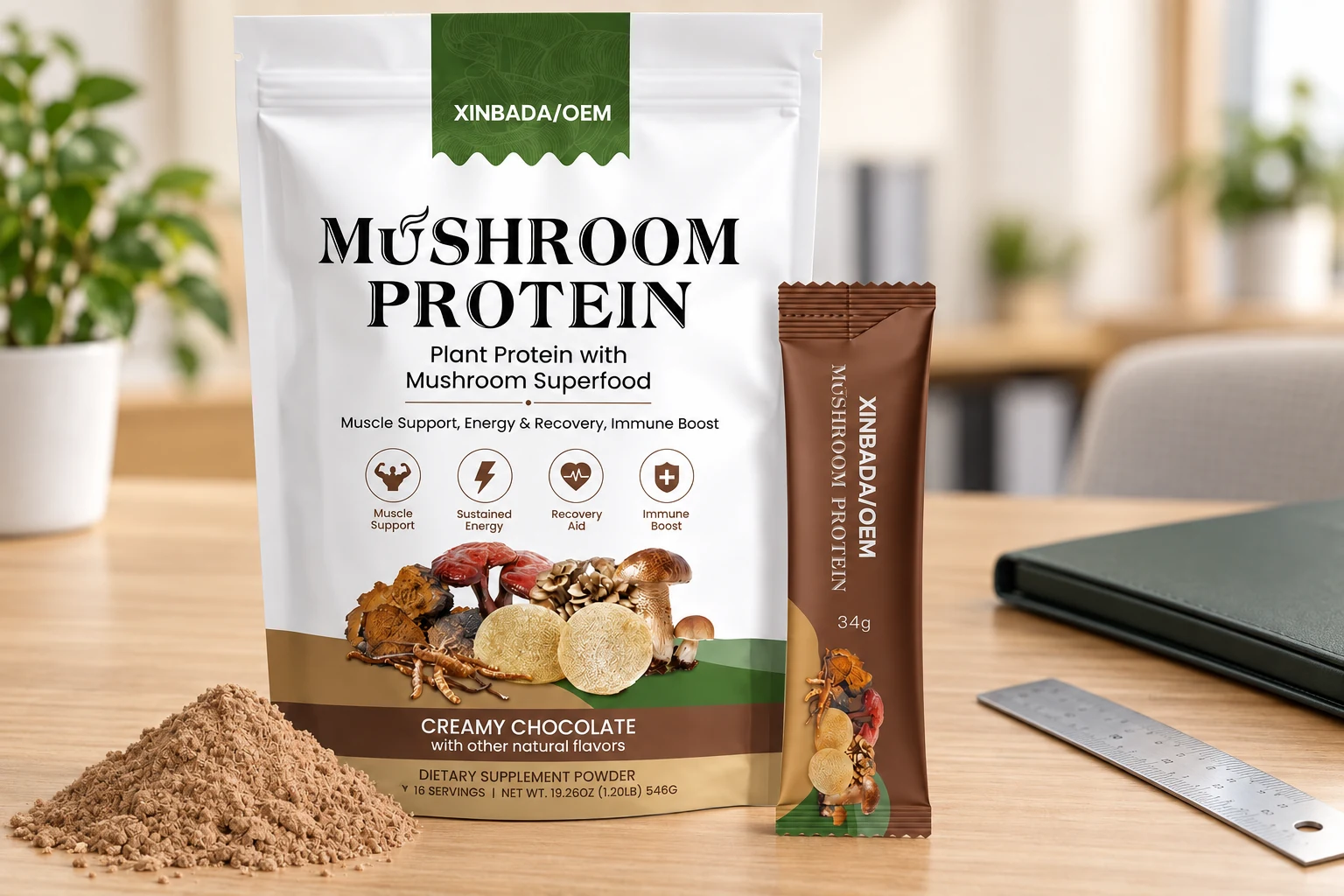
When a product title, technical table and package image disagree, request a corrected dossier. Do not combine values from different variants into a specification that the manufacturer has never accepted.
Use An Ownership Matrix Before Comparing Quotations
A responsibility matrix makes manufacturer qualification concrete. Every critical activity needs an accountable party, a reviewable output and a defined receiver. Outsourced work can be suitable when control survives the handoff.
| Production handoff | Evidence to request | Decision owner to identify | Unresolved risk |
|---|---|---|---|
| Dairy ingredient to blender | Approved ingredient specification, source identity and lot records | Receiving quality team | A purchased ingredient changes without formula review |
| Formula development to production | Controlled recipe and authorized transfer record | Technical transfer lead | The sample and commercial recipe are different revisions |
| Blending to packaging | Bulk lot identification and reconciliation of transferred quantity | Production supervisor and quality reviewer | Material identity is lost between departments or sites |
| Testing to release | Results, deviations and documented disposition | Authorized quality decision maker | A report exists but nobody evaluates an exception |
| Released stock to distributor | Shipment mapping and storage instructions | Distribution owner | A complaint cannot be traced to affected consignments |
Check What The Contracting Entity Can Control
The seller may be a trading company, an operating factory or a group sales office. Ask which entity signs the supply agreement and which entity operates each production location. A commercial intermediary can coordinate a sound supply chain, but it must explain how it obtains records, authorizes changes and manages a rejected lot. An impressive facility tour is insufficient if the seller cannot secure access to the records needed for the actual order.
Trace The Approved Formula Into A Real Production Route
Whey protein powder manufacturers need a repeatable route from the approved recipe to the actual batch. The most useful evidence connects materials, equipment and instructions to the product under review. General manufacturing presentations may describe capability, but they do not show which controls apply to this particular powder, flavor or packaging format.
Evaluate Transfer Conditions That Can Change The Blend
Compare the intended pilot and commercial process: ingredient addition sequence, batch size, mixing equipment, transfer steps and holding conditions. A change in scale can alter how a minor ingredient distributes through a blend. Ask how the manufacturer establishes appropriate mixing conditions and sampling locations for the formula. Do not prescribe a universal mixing time from a brochure; the justification should be specific to the equipment and material behavior.
The site's OEM and ODM service description can help define the development discussion. It should lead to a written division of formulation, sourcing, packaging and approval responsibilities. Development support and ownership of a finished formula are different matters. Record who may revise the recipe, who retains the approved version and how a replacement ingredient is assessed before production resumes.

Make Change Control Specific Enough To Use
A usable change control process names the trigger, information required, reviewer and effective date. Relevant triggers can include a new ingredient source, a revised protein grade, a flavor-carrier change, a different blending line or a new packaging material. Each change should be assessed for its effect on the product specification and the intended label. The review must happen before changed material enters an order that still refers to the previous approval.
Examine How Quality Decisions Override Shipment Pressure
A quality function must be able to hold, reject or investigate material. Manufacturer qualification should test decision authority as well as laboratory capability. Reviewers need the recipe, production record, test methods and deviations, including subcontracted work.
Distinguish A Test Report From A Release Decision
A laboratory reports measurements under stated conditions. The release decision compares those results and the production history with an approved specification. Ask who resolves a result near a limit, an incomplete record or a packaging discrepancy. The record should explain the disposition and its basis rather than silently replacing an inconvenient result with a later retest. Independent laboratories can support the investigation, but they do not automatically assume the manufacturer's release responsibility.
For dietary supplements marketed in the United States, FDA manufacturing guidance discusses specifications, quality control and production records. Classification and the operations performed affect applicability. This supports asking for the relevant quality system; it does not establish FDA approval of a company or product.
Follow One Exception Through To Closure
Select a redacted deviation relevant to powder production and follow its handling. Who first noticed the problem, which lots were held, what information was reviewed and who accepted the corrective action? The example should show that the investigation considered the affected scope, rather than stopping at an explanation for a single sample. A useful discussion also identifies what the company changed to reduce recurrence and how that change was checked.

Published facility information is a starting point for audit planning. Match the review to the actual site and process offered. If the operation is outsourced, request equivalent access to the relevant records through the contracting party. The ability to show attractive equipment should not displace questions about who can stop shipment and how a held batch remains segregated.
Keep Lot Custody Intact After Manufacturing
Finished-product control continues through storage and dispatch. Splitting stock between warehouses or subcontract packers must preserve lot custody, with records that identify affected consignments if a complaint arises.
Test The Link Between Batch, Pack And Shipment
Ask the company to trace an example from a finished-pack lot code back to the bulk blend and its component records, then forward to the shipments that received it. The demonstration should include any subcontract packing or external storage. Reconciliation does not require public disclosure of another customer's details; an anonymized example can show whether quantities and identifiers connect without revealing confidential commercial information.

The company's business and service overview can clarify which logistics tasks are offered. Confirm where responsibility transfers and who retains dispatch records after the transfer. A complaint response becomes slower when the factory assumes the distributor holds the records and the distributor assumes the factory can reconstruct every shipment.
Turn The Findings Into A Qualified Manufacturing Scope
Record a defined approval scope: site, product family, formula revision, pack format and outsourced operations. Separate unresolved questions from verified facts. A company may be suitable for blending and packing while remaining unqualified for an upstream process that was never assessed.
- Confirm the exact proposed whey ingredient and finished-product identity.
- Map each operation to a named site and accountable organization.
- Review the transfer, change and release records relevant to the proposed order.
- Demonstrate traceability through one complete production and shipment example.
- Close material gaps before approving the manufacturing scope.
For whey protein powder manufacturers, a low quotation becomes comparable only after these responsibilities are aligned. An offer that excludes ingredient verification, independent testing or distribution support may still be usable, but those tasks need an owner and a budget. Approval should follow the evidence for the intended arrangement, with reassessment when the production route changes.
Frequently Asked Questions
Must One Company Perform Every Manufacturing Step?
No. Qualified external processors, laboratories and packers can form a controlled arrangement. Specifications, responsibilities and records must remain connected across organizations. The number of addresses alone does not determine suitability.
Does A Plant-Protein Catalogue Prove Whey Capability?
No. Plant-protein products demonstrate a different ingredient family. Shared packaging formats may be relevant to a capability discussion, but a whey offer still needs its own ingredient identity, manufacturing route and applicable controls. Catalogue proximity should never be used to relabel a displayed product.
What If The Manufacturer Will Not Share Its Full Recipe?
Use a controlled review, an agreed specification and documented revision authority. Buyers do not need unrelated customer formulas, but should establish what is being ordered and who can change it.
Can A Certificate Replace A Manufacturing Review?
A certificate can support a review when its issuer, scope, site and validity are checked. It does not describe every product-specific operation or prove that a particular lot meets its specification. Combine relevant certification evidence with the records and responsibilities for the proposed manufacturing scope.
When Should Approval Be Revisited?
Reassess after material changes in site, source, formula, process or quality arrangements, and when performance reveals a concern. Routine review frequency should reflect risk and remain tied to the production route actually used.
A focused manufacturing-scope discussion can start with the proposed whey grade, formula status and packaging format, followed by the named owner of each outsourced operation and quality decision. Request confirmation of any capability not established by the published catalogue before approving the next development step.