Choosing the best protein manufacturer starts with an agreed product specification and evidence that the proposed facility can deliver it repeatedly.
A broad catalogue, an attractive sample and a low quotation answer different questions. None establishes that a particular formula will remain consistent through ingredient substitutions, larger batches, packaging changes and repeat orders. A defensible comparison therefore begins with the intended product and uses the same qualification criteria for every candidate. The outcome is a conditional choice for a defined scope, rather than a universal ranking.
Define What Is Being Qualified Before Comparing Companies
Keep The Formula, Facility And Format Together
A manufacturer may offer development, blending, filling and outsourced services in different combinations. Record the legal entity responsible for the order, the proposed production address, the process performed there and any subcontracted steps. Approval of one plant or one powder does not automatically cover another. The comparison unit should be a named formula, a named operating site and a specified pack format, with responsibilities attached to each.
The OEM and ODM service description is useful for establishing whether a project starts from a supplied formula or from a development brief. It is only a starting point: the agreed scope must identify who owns the formulation, who approves changes and which deliverables are included in the price. Keep development work separate from evidence supporting routine production.
A Protein Category Is Not An Interchangeable Specification
Plant blends, dairy-derived powders and bone-broth products can require different sourcing, allergen controls, sensory expectations and compositional specifications. The same nominal serving size does not establish equivalent nutritional composition or functionality. A plant-based mushroom protein listing and a bone-broth powder listing illustrate different product families; neither can validate the other family's production performance.
Make Evidence Gates More Important Than A Total Score
Weighted scoring is useful only after essential conditions are satisfied. A low price should not compensate for an unresolved identity question or an unavailable batch record. Separate mandatory gates from preferences such as response speed or pack variety. Mark missing evidence as pending, record its owner and set a review date; do not silently assign it an average score.
| Decision Area | Evidence To Compare | Reason To Hold Approval |
|---|---|---|
| Production scope | Named entity, facility, process and subcontractor responsibilities | The quotation and proposed production site do not match |
| Material control | Ingredient specifications, source approval and traceable receiving records | Substitution rules or component identity checks remain unclear |
| Batch release | Agreed tests, acceptance limits and disposition authority | Results cannot be connected to the offered batch |
| Packaging | Approved material, artwork revision and seal evaluation | The sample pack differs from the quoted commercial pack |
| Continuity | Capacity assumptions, change notice and recovery responsibilities | The delivery promise excludes known procurement constraints |
| Commercial fit | Comparable quantities, included services and payment milestones | A cheaper offer omits required testing or development work |
Distinguish A Facility Assessment From A Product Conclusion
FDA's dietary-supplement manufacturing guidance discusses specifications, component controls and documented quality responsibilities. NSF describes facility GMP certification as an assessment of manufacturing systems. These are different evidence categories from a product-specific analytical result. A badge on a website should prompt verification of its issuer, current status, site address and scope; it should not be treated as blanket approval of every formula or claim.
Apply that discipline to NutriCDMO and every other candidate equally. Public service and product pages reviewed on 28 September 2026 establish what is presented online, not an independent audit of current operating capability. This guide does not rank named manufacturers because comparable, verified facility and batch evidence is not available for a defensible ranking. A shortlist should remain provisional until each essential gate has been addressed.
Compare Testing On The Same Measurement Basis
A Certificate Needs A Traceable Analytical Context
A certificate of analysis becomes useful when the item name, lot identifier, sampling basis, specification revision, reported result and approval status can be reconciled. Ask which tests were performed on the actual lot, which rely on qualified upstream evidence and which are outside the release scope. A polished certificate without this context may conceal differences that make two quotations impossible to compare fairly.
Compare analytical methods as well as numerical results. Different preparation procedures, reporting bases or calculation conventions can produce values that appear inconsistent without proving that either laboratory is wrong. Resolve the intended method and reporting units before samples are sent. When a result is near an acceptance limit, document the agreed investigation process instead of switching methods simply to obtain a favorable number.
Use A Disagreement To Test The Investigation Process
Consider an illustrative case in which the development sample meets a sensory target but a later lot has a different dispersibility profile. The useful response is a traceable investigation of retained samples, material lots, process records and preparation conditions. It is not a verbal assurance that the formula is unchanged. Ask who authorizes retesting, how original results remain visible and who decides whether material can be released.
The best protein manufacturer for that project should be able to explain the evidence chain and its limits. A supplier need not claim that variation is impossible; it should show how meaningful variation is detected, assessed and resolved. Compare the proposed response against an agreed procedure before the first commercial order, when changing responsibilities is easier than resolving a shipment dispute.

Use Samples To Explore Risk Before Scaling Up
Give Each Sample Round A Specific Question
An early sample can address flavor direction or preparation behavior, while a later pilot can address a more representative process and package. Label those purposes explicitly. Agree the preparation instructions, evaluation conditions and acceptance observations before comparing samples. Otherwise, a change in water temperature, mixing time or storage conditions can be mistaken for a change in formulation.
Qualify The Pack Alongside The Powder
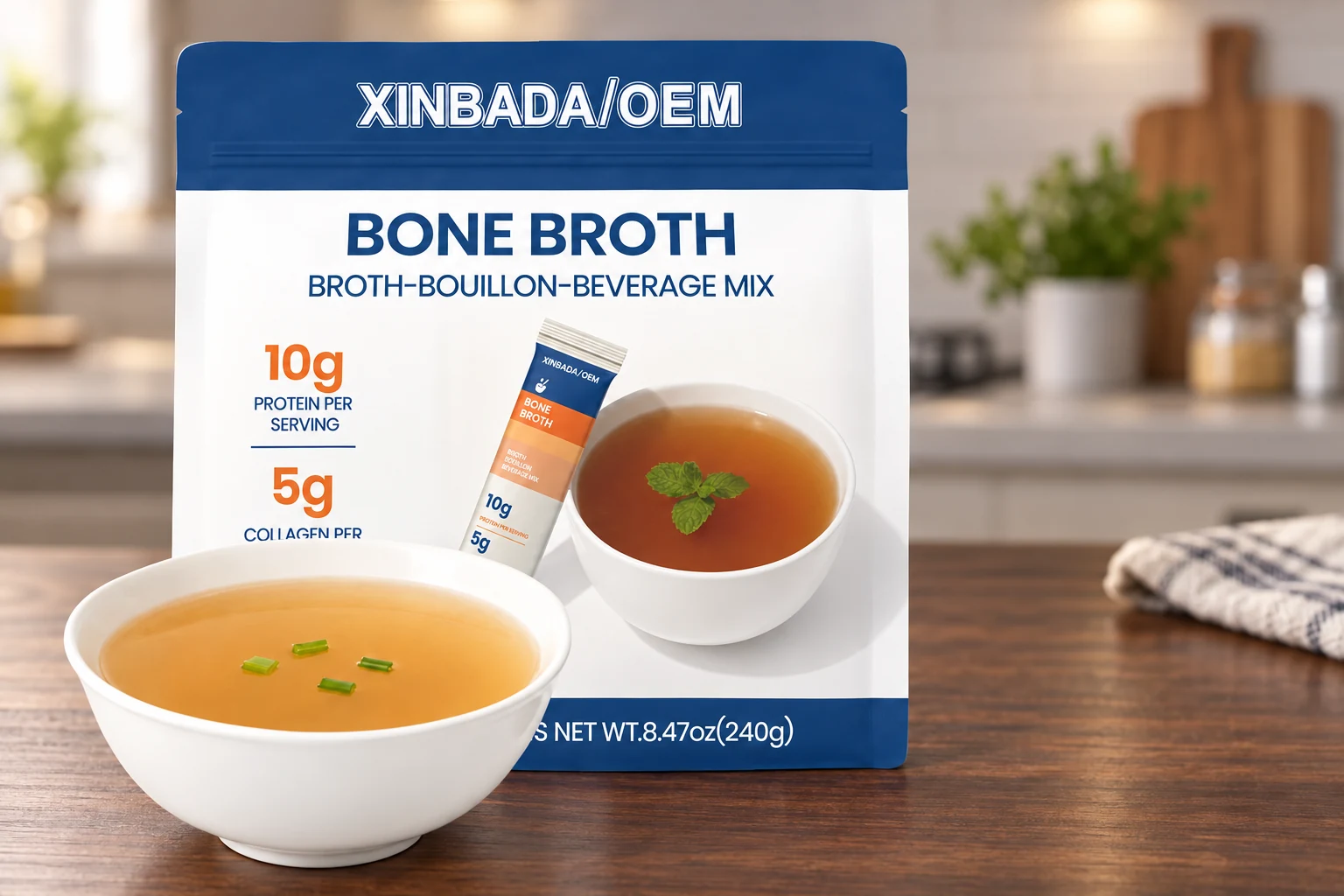
A pouch and a single-serving stick create different filling, sealing and handling questions. The carton-and-stick product example demonstrates a presentation format, while the selected pouch example shows another. Neither photograph establishes moisture-barrier performance, shelf life or filling accuracy. Those characteristics belong in a documented package evaluation tied to the actual material and product.
Keep artwork approval separate from technical package approval. Identify the version controlling ingredient declarations, serving information, instructions and traceability markings. A visually correct mock-up can still use a different substrate from the commercial order. Record the proposed pack material and the conditions under which changes require approval, including a change to the printer or packaging supplier.

Translate The Agreed Scope Into Working Responsibilities
A quality agreement should make routine decisions and exceptions understandable to both parties. Useful topics include specification approval, material changes, record access, nonconforming stock, retained samples, complaints and recall cooperation. Responsibilities need named functions and response expectations. A broad promise of premium quality adds little when the parties have not agreed who can authorize a deviation.
For example, an ingredient source may become unavailable after a forecast has been accepted. Define whether the manufacturer can propose a substitute, what comparison evidence is needed and who gives written approval. Treat an urgent delivery date as a planning constraint, not as permission to bypass the approved specification. The same logic applies to changing a subcontracted test laboratory or transferring a process.
Check Supply Continuity Without Confusing Stock With Capability
Warehouse photographs and large catalogue counts do not establish that a particular ingredient, package or production slot is available. Ask for a project-specific plan that distinguishes procurement lead time, production scheduling, testing, release and transport. A quoted manufacturing interval may exclude several of those steps. Compare lead times from the same starting event and identify which approvals can stop the clock.

Normalize the commercial comparison after technical gates are resolved. Use the same formula revision, order quantity, pack specification and release scope. Show development charges, testing, artwork, tooling and freight separately where applicable. A lower unit price can remain attractive, but its advantage should survive a comparison of the full agreed scope rather than depend on omitted work.
Reach A Conditional Decision That Can Be Reviewed
Record why the selected candidate meets the qualification criteria, which limitations remain and what would trigger reassessment. Approval can be limited to a formula, facility and pack rather than granted to the entire catalogue. This makes the decision more defensible when a later project introduces a different protein source, ingredient restriction or serving format.
The best protein manufacturer is therefore the candidate whose verified scope matches the project and whose responsibilities remain clear after the initial sample. Price, responsiveness and product breadth can inform the decision, but they should not conceal unresolved evidence gaps. Reassess the choice when a material change affects the basis on which approval was granted.
Frequently Asked Questions
Can One Successful Sample Qualify A Manufacturer?
No. It can support a defined development decision, but repeat production needs an agreed specification, a representative process and documented release responsibilities. The sample's preparation history matters.
Is The Largest Product Catalogue The Strongest Choice?
Catalogue breadth indicates marketed scope. It does not establish capability for a particular formula, facility or package. Compare the evidence for the actual project rather than counting unrelated products.
Should Two Laboratory Results Match Exactly?
They should be interpreted against agreed analytical methods, sampling conditions and reporting conventions. Investigate material differences using a documented process rather than selecting the more favorable result.
Does A Certification Badge Cover Every Product?
Not automatically. Check the issuing organization, current status, named site and defined scope. A facility assessment and a product-specific certification answer different questions.
When Should A Supplier Approval Be Revisited?
Review it when a significant formula, material, site, process or packaging change affects the original basis for approval. The quality agreement should define the relevant notification and review responsibilities.
For an unresolved scope question, use the contact page to request the proposed facility, formula revision and supporting documents for the specific product under review.