Softgel capsule manufacturing joins a prepared liquid or semisolid fill with a flexible shell, then controls sealing, drying and finishing so the capsule remains fit for its intended use.
Start With The Relationship Between The Fill And The Shell
A softgel is a sealed, one-piece dosage form whose outer material and contents must work together. It is not simply a hard capsule filled with oil. The process forms and closes the shell around a measured fill, so a change to either component can affect later handling and performance.
Distinguish A Softgel From A Two-Piece Capsule
In a conventional two-piece hard capsule, a preformed body and cap are assembled after filling. In the familiar rotary-die softgel route, flexible ribbons meet while the fill is introduced and the capsule is sealed and cut.
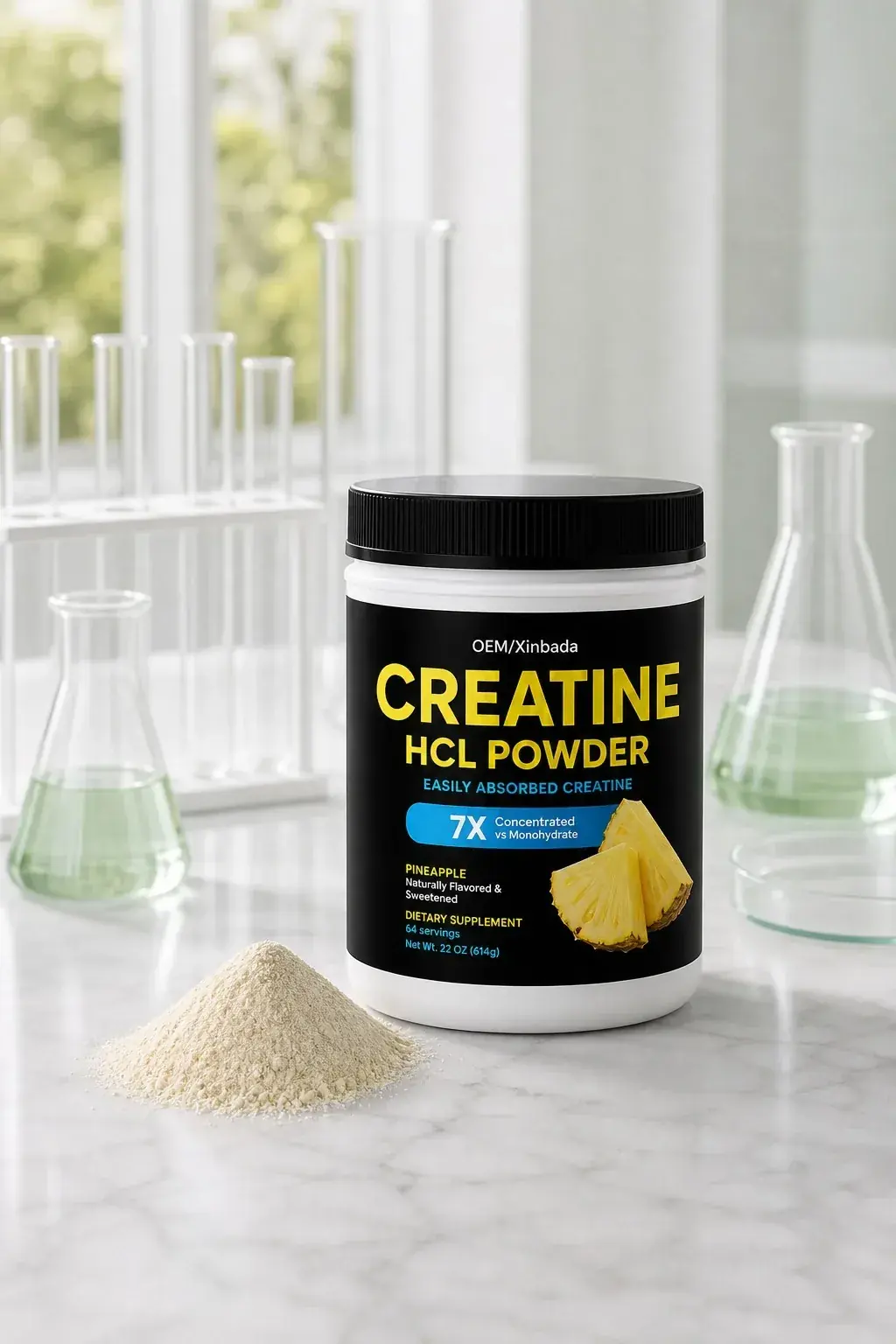
A smooth oval appearance alone cannot establish the shell material, ingredient identity or release behaviour. A transparent shell can make the contents visible, but it does not reveal the formula or prove purity. Read a catalogue image as a dosage-form example and confirm the product description separately. The site's vitamin catalogue is useful for identifying advertised formats; it does not mean that all vitamin products use the same capsule process.
Treat Compatibility As An Early Development Question
The fill formulation needs to remain suitable for the shell during manufacture and storage. Oils, dissolved ingredients and suspended particles create different development questions. A stable-looking mixture in an open vessel may behave differently after it contacts the capsule wall. Movement of moisture or other components can alter the shell even when the filled capsule initially looks satisfactory.
Prepare Two Controlled Material Streams Before Encapsulation
Keep Material Condition Separate From The Ingredient List
A fill may contain ingredients in solution or as a suspension. That distinction affects how the material is mixed, held and transferred. For a suspension, a representative portion must remain representative when it reaches the dosing system; settling or agglomeration is a different question from whether the correct ingredient was weighed. For an oil-based system, exposure and compatibility need consideration without assuming every oil behaves alike.
The gelatin shell typically includes a film-forming material, water and a plasticizer that helps provide flexibility. Shell preparation involves controlled mixing and appropriate removal of entrained air. Technical guidance from ingredient suppliers illustrates that plasticizer choice and proportion depend on the shell and fill system. Their example formula is not a universal setting for every product or production line.
Record the material's identity and its condition at the point of use. A useful process explanation distinguishes the approved composition from properties such as flow behaviour, temperature sensitivity and dispersion. The OEM and ODM service overview provides context for formulation discussions, while the actual formulation and permitted operating conditions remain project-specific.
Coordinate Ribbon Formation, Dosing And The Capsule Seam
Rotary-die encapsulation brings the two material streams together. The equipment forms ribbons, meters the fill between them and creates the capsule boundary. These actions must remain coordinated, because the operation produces both a container and a filled unit at the same time.
Read The Seam As Part Of The Process
The ribbons must have a condition that permits forming and joining without losing their intended structure. Dosing needs to align with the forming cycle. A change in ribbon behaviour, fill flow or machine timing can therefore affect the result even when the nominal ingredient list is unchanged. This explains why an observed defect should be investigated in context instead of being assigned immediately to one raw material.
Seam integrity and fill amount answer different questions. A capsule can have the expected mass yet still require inspection for an inadequate seal; a visually neat seam does not establish the amount or uniformity of its contents. Checks must address the attributes relevant to the formula and process, using defined methods and acceptance criteria rather than photographs alone.
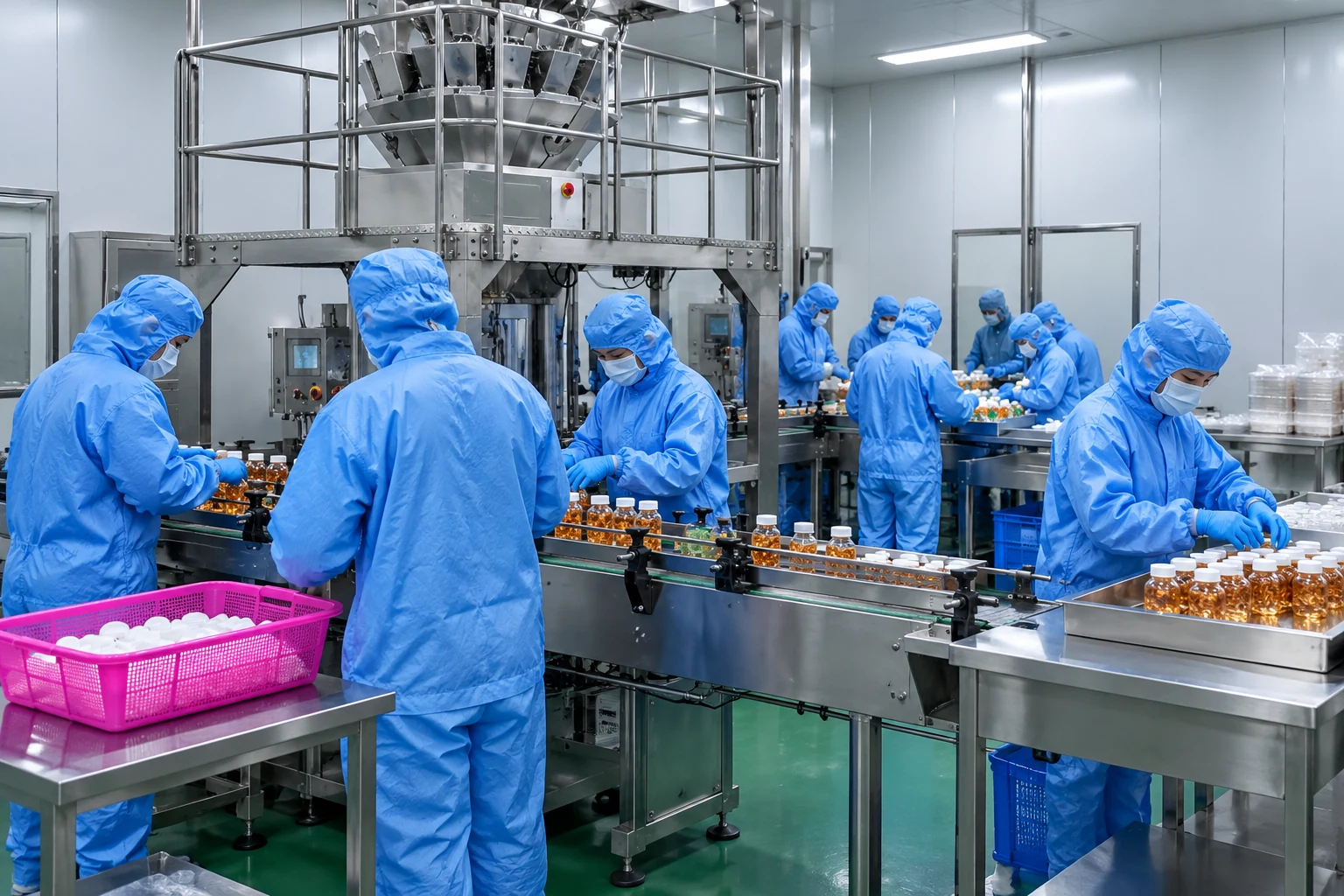
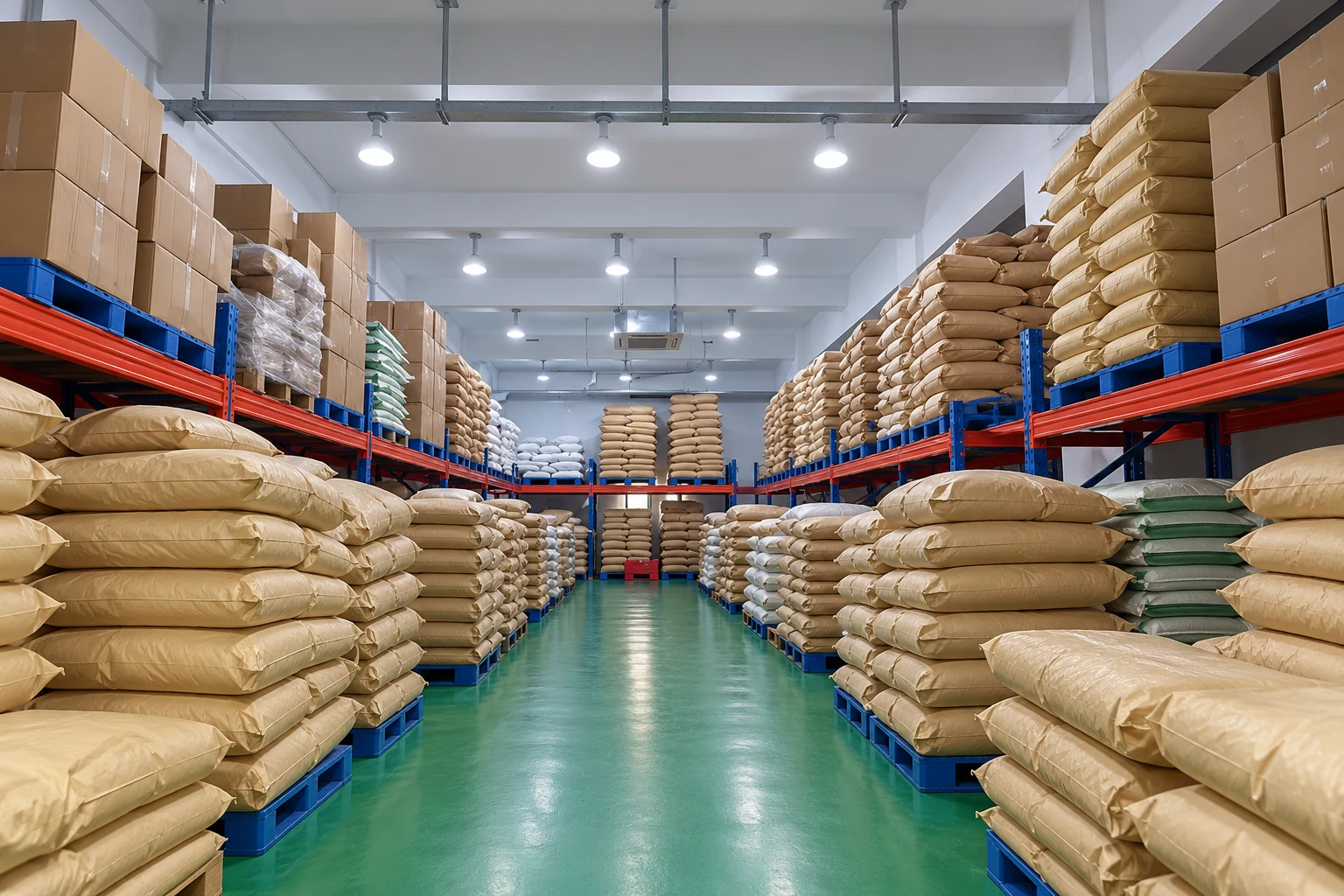
For softgel capsule manufacturing, scale-up is more than increasing a counter on the production schedule. Material holding time, transfer arrangement and the rhythm between preparation and encapsulation can change. A development team should explain which aspects are kept comparable and which require fresh confirmation. The facility overview can introduce the advertised production setting, but a site photograph does not establish a particular rotary-die configuration.
Use Drying To Reach A Suitable Capsule Condition
Freshly formed softgels are not necessarily ready for final packing. Drying removes moisture from the shell and changes its handling properties. The endpoint belongs to the complete product system, so a fixed elapsed time cannot substitute for evidence that the intended condition has been reached.
Distinguish A Drying Schedule From A Drying Endpoint
Published technical descriptions commonly distinguish an initial moving-air or tumble stage from a further controlled drying stage. The particular equipment and sequence vary. Air conditions, capsule size, shell composition, fill interaction and loading arrangement can influence the result. A time quoted for one formulation should not be transferred to another without supporting work.
The aim is not to remove as much water as possible. Excessive loss can create a different handling problem from insufficient removal. A capsule that feels firm at one moment may still need assessment after equilibration or storage. Drying conditions should therefore be discussed alongside the method used to judge the endpoint and the permitted interval before the next operation.
| Process Stage | Main Question | Evidence That Adds Meaning |
|---|---|---|
| Fill preparation | Is the intended material ready for consistent transfer and dosing? | Approved composition and relevant mixing or holding observations |
| Shell preparation | Can the shell mass form the intended flexible ribbon? | Material identity and defined preparation controls |
| Encapsulation | Are forming, dosing and sealing coordinated? | In-process observations linked to the equipment and batch |
| Drying | Has the capsule reached a suitable condition for further handling? | Drying conditions and a justified endpoint assessment |
| Finishing and packing | Does the accepted capsule remain protected and correctly identified? | Inspection, packaging controls and product-specific stability work |
Evaluate Finished Capsules Beyond Their Surface Appearance
Visual inspection is useful, but it addresses only part of the finished product. Appearance, content, shell integrity and release-related behaviour are different attributes. A meaningful assessment connects each question to a suitable method instead of asking one attractive photograph or one pass statement to answer everything.
Separate Shell Opening From Fill Behaviour
A capsule shell must first allow access to the contents before the behaviour of the released fill can be understood. Scientific literature on softgel dissolution methods describes why the shell and fill can create separate testing challenges. A method suitable for one system cannot simply be assumed suitable for another. Product classification and the applicable requirements determine which tests and limits are needed.
The same discipline applies to manufacturing records. Identify what was examined, which sample or batch it represents and whether a result concerns an ingredient, a freshly made capsule or the finished packed product. A laboratory photograph shows a setting, not an analytical result. The company's business and technical-service description should be read separately from the actual evidence for any specific product.
Testing also needs a stable reference point. If the fill formulation, shell material or packaging changes, consider whether the earlier evidence still answers the current question. The FDA's dietary-supplement guidance distinguishes production controls, laboratory operations and release responsibilities within its stated scope. That separation is useful background; it is not proof of compliance by a pictured company or a universal testing list for every market.

Keep Finishing, Packaging And Storage In The Same Process Story
The manufacturing explanation remains incomplete if it stops when an intact capsule leaves the line. Sorting, handling and packing must preserve the accepted condition and maintain identity. The finished package also influences exposure during storage, so the package choice belongs in product development rather than being treated as a purely decorative decision.
Assess The Capsule In Its Intended Pack
A bottle and a blister are different protection systems, and neither is automatically correct for every softgel. Closure, barrier properties, headspace and handling all need consideration for the actual product. Any protective insert or added packaging component should be justified for that system, not added on the assumption that it always improves stability.
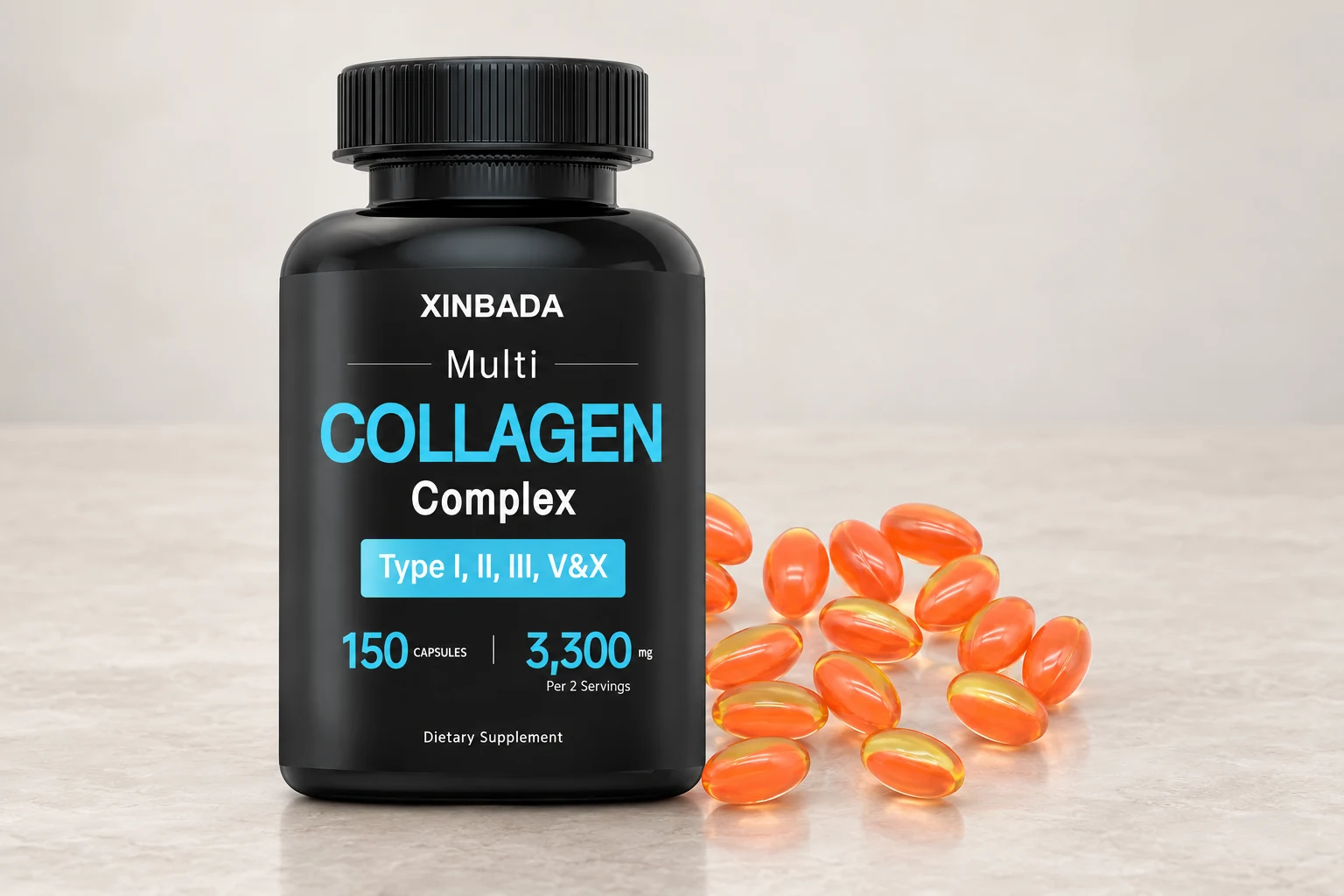
The listed vitamin capsule presentation illustrates why format matters: a powder jar, hard capsule bottle and softgel pack should not inherit identical storage assumptions. An example from the collagen product category may belong to a different dosage form even when its ingredient is familiar. Preserve that distinction when comparing product presentations or planning a line extension.
Softgel capsule manufacturing is best understood as a connected sequence rather than a collection of isolated machines. The useful handoff is a defined product with linked preparation, encapsulation, drying and packaging evidence. Knowing which step creates each attribute makes later technical discussions clearer without promising that a general process description can replace development or validation.
Frequently Asked Questions
Does Every Softgel Contain Fish Oil?
No. Oil-based supplements are familiar examples, but a softgel can contain a suitable liquid, suspension or semisolid system. The contents and shell must be identified from the actual product evidence, rather than inferred from a capsule's colour or shape.
Are Softgels Always Made With Gelatin?
No. Gelatin is a common shell material, while non-gelatin systems also exist. They require their own formulation and process understanding. A vegetarian or other composition claim should be checked against the complete shell specification.
Can Capsule Size Be Changed Without Reviewing The Process?
A size change can affect the relationship between fill volume, shell formation, handling and drying. Its importance depends on the product. Review the proposed change against the established development work instead of assuming that a smaller capsule is merely a scaled photograph.
Why Can A Good-Looking Capsule Still Need Further Testing?
Appearance cannot establish content, seal reliability over time or release-related behaviour. Each relevant attribute needs appropriate evidence. Visual acceptance is one observation within a wider assessment, not a replacement for the remaining checks.
Is There One Standard Drying Time For All Softgels?
No universal duration can be taken from a general process article. The formula, capsule design, equipment and controlled environment matter. A documented endpoint for the actual system is more useful than borrowing the time used for a different product.
The main principle is to keep the fill, shell and finished pack in view together. A change that appears local can affect another stage, so understanding those connections is the foundation of a sound technical conversation about softgels.