A protein private label manufacturer should turn a formula brief into documented decisions on ingredients, processing, packaging, labeling, release, and change control. The useful question is not whether a factory can fill a pouch; it is whether buyer and manufacturer can preserve one approved product definition from the first sample through the commercial batch.
The Launch Brief Must Define Decisions, Not Aspirations
A brief such as “premium chocolate protein for the United States” establishes direction but leaves most production choices unresolved. Protein source, flavor system, serving logic, pack size, claims, testing, target shelf life, order volume, and artwork timing all change the work. A controlled brief separates fixed requirements from preferences and explicitly identifies items that still need evidence.
Commercial Requirements Need Technical Counterparts
Every commercial phrase should point to a technical decision. “Smooth” needs an agreed preparation method and an approved sensory reference. “High protein” needs a serving definition, formula calculation, test strategy, and compliant label review. “Easy to ship” needs a package format, case configuration, pallet assumption, and transport conditions. These links keep sales language from outrunning the evidence available to production and quality teams.
Formula Ownership and Revision Control Must Be Explicit
A buyer-owned formula, a manufacturer-developed concept, and a jointly modified recipe create different intellectual-property and approval paths. The project agreement should state who authorizes ingredient substitutions, flavor revisions, processing aids, overages, and supplier changes. Strong formula transfer controls connect each sample to a dated revision so that comments such as “less sweet” or “more cocoa” become traceable changes rather than informal memories.
The same logic applies when reviewing OEM and ODM service options. Service capabilities provide context; the signed project specification still governs the batch.
Ingredient Evidence Determines Whether the Formula Can Repeat
Protein powders combine materials with different density, particle size, flavor intensity, moisture sensitivity, and supply risk. A purchasing description alone cannot show whether a new lot will behave like the approved sample. The ingredient control plan should connect identity, specification, supplier status, incoming decision, storage condition, lot traceability, and finished-product impact.
Supplier Documents Are Inputs, Not Automatic Release Decisions
A certificate of analysis can support review, but it should be matched to the correct material, supplier, specification, test method, and lot. Buyer and manufacturer should decide which attributes require independent confirmation, which can rely on qualified supplier evidence, and how deviations are escalated. For U.S. dietary supplements, applicable responsibilities depend on the product and role, so the regulatory and quality plan should be reviewed by qualified specialists rather than inferred from a marketing badge.
Substitution Rules Belong in Change Control
Shortages create pressure to treat materials with similar names as equivalents. They may still differ in origin, grade, particle distribution, carrier, allergen profile, flavor, color, or bulk density. The agreement should state what is prohibited, what requires written buyer approval, and what may proceed within a defined equivalence rule. A change request should identify the reason, affected formula revision, risk assessment, sample requirement, label impact, cost impact, and disposition.
Manufacturing Records Convert the Approved Formula Into Repeatable Work
A protein private label manufacturer needs instructions that trained operators can execute and quality reviewers can audit. The master instructions should describe dispensing, screening, addition order, mixing sequence, relevant time or endpoint controls, in-process sampling, bulk hold, filling, coding, reconciliation, and deviation handling. The level of detail should reflect the actual formula and equipment rather than a generic flowchart.
Batch Production Records Must Capture What Actually Happened
Master instructions describe the intended process; batch production records document execution. Useful records identify the authorized version, component lots and quantities, equipment, operators, timestamps, yields, checks, deviations, and reviewer decisions. Entries should be contemporaneous and attributable. A completed form is meaningful only when it lets a reviewer reconstruct the batch and compare execution with the approved plan.

| Decision gate | Minimum buyer input | Manufacturer evidence | Approval question |
|---|---|---|---|
| Formula freeze | Authorized revision and intended market | Manufacturability review and component list | Is every ingredient and amount approved? |
| Sample approval | Defined preparation and sensory criteria | Traceable sample code and revision | Does the reference match the intended experience? |
| Packaging freeze | Pack format, artwork, coding, case pack | Material specification and line review | Can the correct product enter the correct pack? |
| Production release | Purchase authorization and approved files | Complete batch execution packet | Was the approved process followed? |
| Finished release | Agreed acceptance and shipment rules | Results, review, disposition, retains | Does evidence support release of this lot? |
Packaging and Label Review Must Run as a Controlled Workstream
Packaging is part of product performance, not decoration added after formulation. The powder, pouch or tub, closure, seal, scoop, label, carton, and distribution environment interact. Material compatibility, moisture protection, fill volume, seal integrity, code area, opening experience, case strength, and transport handling should be reviewed against the real product and route to market.
The Label Approval Workflow Needs Named Owners
A reliable label approval workflow distinguishes factual inputs, regulatory review, creative layout, prepress proof, and production authorization. Formula data and serving logic should feed the draft; qualified reviewers should assess required statements and proposed claims for the intended market; the buyer should approve commercial presentation; and the manufacturer should confirm the released artwork can run on the selected package.
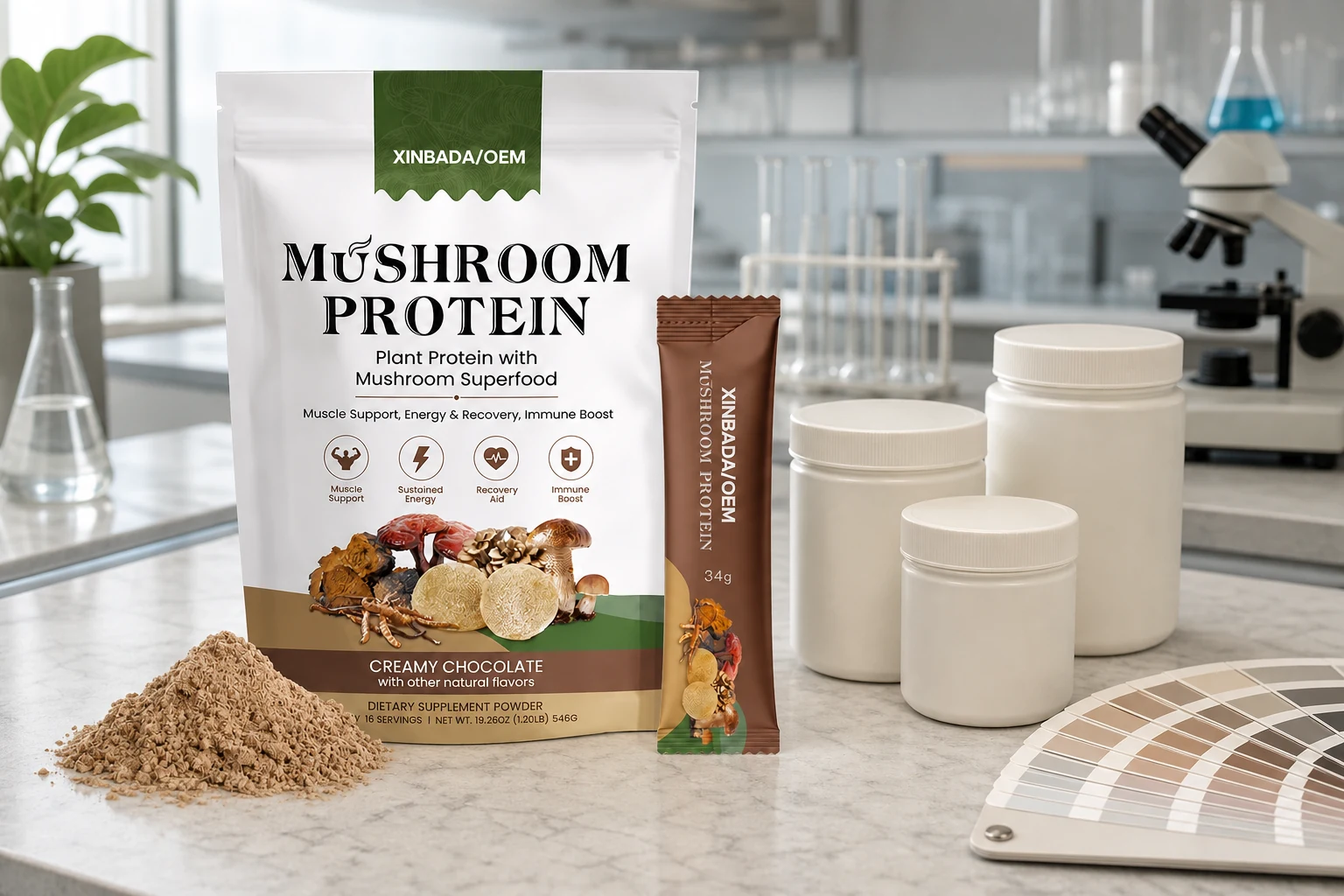
The approved-artwork record should identify revision, approvers, printer proof, barcode status, code area, and superseded versions. Line clearance and first-piece checks help prevent an obsolete label from being used with correct powder. The current mushroom protein product presentation illustrates a format, but a new project needs its own review.

Release Evidence Should Be Designed Before the First Order
Release criteria are easiest to negotiate before inventory and launch deadlines create pressure. The agreement should define required tests or checks, specifications, sampling responsibilities, laboratory roles, result format, quality review, deviation handling, retention, and shipment authorization. It should also say how an out-of-specification, atypical, or delayed result affects disposition.
One Packet Should Support One Lot Decision
The release packet may include the executed batch record, component traceability, in-process observations, packaging reconciliation, coding checks, finished-product results, deviations, and quality disposition. The exact set varies by product and market. The important principle is coherence: every record should identify the same lot and approved revision, and the release decision should be attributable to an authorized reviewer.
Buyers should also agree how retains, complaints, investigations, and recalls will be supported after shipment. The manufacturer profile can help frame a capability review, yet project-specific evidence remains necessary. Site claims about systems or certifications should be checked against current, applicable documents and the scope relevant to the ordered product.
Changes After Launch Need a Defined Threshold
Commercial products evolve. Ingredient availability, print updates, new markets, equipment changes, and cost objectives can trigger revisions. Change control should define what information is required, who evaluates impact, whether a new sample or test is necessary, and when old materials may no longer be used. A decision log prevents several small changes from accumulating into a product no one explicitly approved.

A Protein Private Label Manufacturer Scorecard Should Test the Entire Evidence Chain
Price, minimum order quantity, and lead time matter, but they do not show whether the launch can remain controlled. A practical evaluation follows one hypothetical SKU from brief to released lot. Ask the candidate to explain decision ownership, document flow, change approval, sampling, batch review, artwork control, deviation escalation, and shipment authorization. Specific answers reveal more than a long capability list.
- Request a redacted example showing how a formula revision becomes an approved production instruction.
- Ask how component lots, production entries, packaging materials, and finished results are linked.
- Confirm who approves substitutions, deviations, artwork proofs, and final release.
- Define response times and evidence requirements for complaints or investigation support.
- Compare responsibilities in a quality or technical agreement before commercial commitments.
The purpose is to confirm that the operating model can produce the evidence your project requires. Review the site's technical articles for context, then make the final scope reflect product risk, intended market, internal capabilities, and qualified regulatory advice.
Frequently Asked Questions
What should be ready before approaching a private-label protein producer?
Prepare the intended market, use occasion, preferred protein source, exclusions, flavor direction, serving concept, package preference, estimated volume, target date, and decision owners. The company homepage offers orientation, while a structured brief lets the manufacturer identify project dependencies.
Who should own the final formula and label decision?
Ownership depends on the commercial and technical agreement. It should be explicit, documented, and consistent with applicable responsibilities. Separate formulation authorship from authorization to manufacture, and identify who reviews regulatory, claims, nutrition, artwork, and production feasibility for the intended market.
Is a certificate of analysis enough to release a batch?
Not by itself. It is one input to a defined release process. The reviewer should confirm the document belongs to the correct lot, uses agreed specifications and methods, and sits alongside the required production, packaging, deviation, and disposition records.
How should a buyer compare quotations from different manufacturers?
Normalize the scope before comparing price. Confirm formula version, included tests, package components, tooling or setup, sampling rounds, freight terms, documentation, change fees, lead-time assumptions, and minimum quantities. A lower headline price can represent a narrower evidence or service package.
When should the first commercial batch be treated differently?
When scale, equipment, ingredient lot, packaging line, or process conditions differ materially from the approved sample. The first batch may justify added observation, sampling, review, or retained comparisons. The plan should be agreed before production, with acceptance and escalation rules defined.
If your brief is ready for a controlled feasibility review, share the approved requirements and open decisions through the project contact channel; the next step should be an evidence-based scope, not an assumed production promise.