Organic protein powder manufacturers should be qualified through both organic-chain evidence and a separate supplement-quality record trail. A certificate cannot show by itself that the quoted formula, facility, label, and lot are covered, while factory imagery cannot prove segregation. Evaluation should begin with the intended claim, follow each handling step, and test release against an agreed specification.
Why Supplier Qualification Needs Two Evidence Systems
Organic status and manufacturing quality answer different questions. Organic rules govern how qualifying agricultural ingredients are produced, handled, identified, and represented. Quality controls govern whether the finished powder matches its master manufacturing record, specifications, packaging, and label. Buyers should connect the two systems without treating either as a substitute for the other.
The Organic Claim Must Match the Certificate Boundary
The first check is the proposed market claim: “100 percent organic,” “organic,” “made with organic ingredients,” or an ingredient-only statement. Each creates a different composition and labeling path. The supplier should identify the certified operation, certifier, covered handling activity, product or category scope, and current certificate status. The organic certification scope must include the operation that mixes, packages, or labels the finished product when that activity requires certification; an ingredient certificate or a broker’s document is not automatically enough.
The Finished Supplement Still Needs Its Own Quality Chain
A second file should show how the formula becomes a controlled finished lot. For a dietary supplement, that means approved component specifications, identity verification, a master record, executed batch documentation, in-process checks, packaging and label controls, quality-unit review, and retained records. FDA guidance for 21 CFR Part 111 makes this logic independent of organic status. Request dietary supplement CGMP evidence separately rather than infer it from an organic certificate.
Define the Product Before Comparing Factories
Supplier comparison becomes unreliable when each candidate quotes a different formula, serving size, flavor system, package, or claim. The buyer should create one controlled request pack before assessing OEM and ODM options. Unknowns can remain open, but every bidder should state the same assumptions and identify which requirements need development work.
Build a Claim-and-Ingredient Matrix First
List every agricultural ingredient, minor ingredient, flavor, processing aid, sweetener, and carrier, then mark its organic status and functional purpose. Link that matrix to the intended principal-display claim and destination-market label review. This prevents a factory from answering a broad “organic powder” request with a certificate that covers only one raw material. It also exposes formula constraints early, such as whether a nonorganic component is allowed, commercially available, or incompatible with the intended claim.
Convert Commercial Language into Acceptance Criteria
Terms such as clean, natural, premium, high protein, smooth, or easy mixing are not release specifications. Translate them into measurable or reviewable criteria: ingredient identity, protein target and method, moisture, microbiological limits, allergen status, sensory reference, net content, fill tolerance, package barrier, label version, and any justified contaminant panel. Values should come from the approved formula, risk assessment, regulations, and confirmed capabilities—not from a generic template or an unverified website statement.
| Decision question | Evidence to request | What a reviewer should match | Warning sign |
|---|---|---|---|
| Can the intended organic claim be used? | Current certificate, operation profile, product or handling scope, proposed label | Legal operation, location, activities, category, certifier, dates, and exact claim | Certificate belongs to an ingredient seller or unrelated site |
| Can the formula be manufactured consistently? | Approved formula, specification set, master record, change-control route | Ingredient names, quantities, tolerances, process order, and package version | Quote changes ingredients without controlled approval |
| Can a finished lot be reconstructed? | Executed record, incoming lots, yields, deviations, release decision | One lot number across material issue, production, testing, packing, and shipment | Records are samples with disconnected or removed identifiers |
| Can claims survive a real label review? | Artwork proof, ingredient statement, claim substantiation, certifier review where applicable | Formula, serving, net content, certification language, and market requirements | Artwork approval is postponed until after mass production |
Audit Organic Handling as a Chain, Not a Badge
A credible audit follows materials through receiving, quarantine, storage, weighing, blending, packing, release, and shipment. USDA handling guidance emphasizes preventing commingling with nonorganic product and contact with prohibited substances. The practical question is whether the facility can show how those controls operate for the proposed product, not whether a certification logo appears in a sales deck.
Verify the Certification Handshake at Every Transfer
Map the legal entities that sell, export, import, process, store, and label the product. For each transfer, confirm whether the operation must be certified or qualifies for a limited exemption, and record the evidence. Names and addresses on certificates, invoices, transaction documents, and labels should reconcile. When a manufacturer claims access to organic inputs, the buyer should verify the actual supplier and current organic certification scope, not accept a cropped certificate image.
Test Segregation and Mass-Balance Logic
The floor audit should show identified zones or time separation, controlled cleaning, material status labels, restricted substitutions, and reconciliation of issued versus recovered quantities. Ask the site to walk one representative lot from receiving record to final shipment. Useful batch traceability records connect raw-material lot numbers, quantities, equipment, operators, cleaning status, rework decisions, packaging components, and released units. A perfect yield is not the objective; unexplained loss, gain, or material substitution is the concern.

Test the Manufacturing Evidence Behind the Sales Claims
The facility and equipment presentation can help a buyer frame questions, but photographs do not establish capacity, validation, calibration, or release authority. A remote review should request controlled examples; an onsite audit should compare those examples with the operating floor and record system.
Follow One Material from Receipt to Use
Select a high-risk or identity-critical ingredient and request its purchase record, supplier approval, receipt record, internal lot assignment, quarantine status, sampling record, identity result, storage location, and quantity issued to a batch. The names and lot codes should agree without manual explanation. If a powder is received in bulk and repacked or relabeled, the handling step and certification consequence should be explicit rather than hidden behind the upstream supplier’s paperwork.
Follow One Batch from Master Record to Release
Next, compare the approved master record with an executed example. Check component reconciliation, equipment identification, processing sequence, in-process observations, deviations, test results, label issue, yield review, and quality approval. Strong dietary supplement CGMP controls make the release decision reproducible by an independent reviewer. They also show who can stop the lot and how a change to formula, source, method, or artwork is assessed before use.

Compare Manufacturers with a Risk-Adjusted Scorecard
Organic protein powder manufacturers should not be ranked by certificate count, equipment photographs, or one sample. Weight failures by consequence: claim legitimacy and material identity are gates, while flavor refinement can follow. Apply the same evidence standard to every candidate and record missing evidence as “not verified.”
- Gate 1—claim legality: the proposed claim, formula, certifier path, and label category align.
- Gate 2—material control: approved sources, identity checks, segregation, and substitution rules are documented.
- Gate 3—process repeatability: the master record, equipment boundary, in-process checks, and yield review are coherent.
- Gate 4—release evidence: methods, specifications, deviations, quality approval, and retained samples are defined.
- Gate 5—commercial execution: packaging, change control, communication, capacity assumptions, and shipment release support the planned program.
Score evidence quality separately from capability. “Document supplied” is not the same as “document matches the request.” A current certificate may be genuine but out of scope; a polished batch record may refer to another formula; a passing report may use a sample unrelated to the trial lot. The review notes should state the mismatch, responsible party, and required closure evidence.

Use the Trial Order to Close the Most Important Unknowns
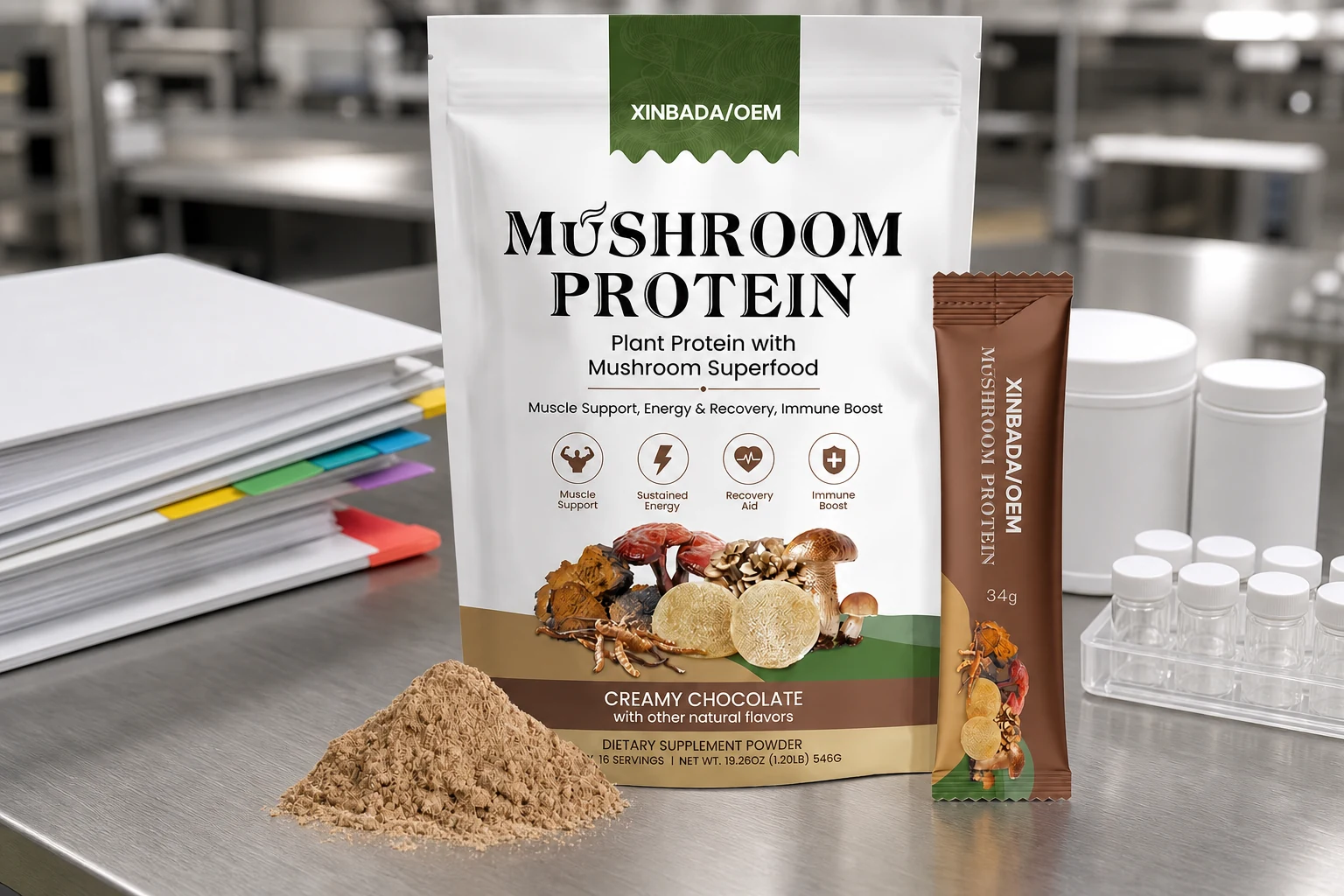
For organic protein powder manufacturers, a trial should be an evidence test rather than merely a taste sample. Freeze the formula and artwork version, identify input lots, agree on acceptance rules, and define the record pack. If the site profile and protein powder category indicate multiple formats, specify the exact presentation. A relevant product example can clarify packaging questions, but it cannot prove organic status or suitability for another formula. The trial file should connect the approved sample, batch, test sample, released units, and shipment through consistent identifiers.
Frequently Asked Questions
Does an Organic Ingredient Certificate Prove the Finished Powder Is Organic?
No. The finished product’s claim depends on composition, handling, certification responsibilities, and labeling. Buyers should verify the certified operations and activities across the chain, then confirm that the formula and proposed label fit the applicable organic category.
What Is the Fastest Way to Screen a Manufacturer?
Start with a controlled request pack and ask for a current certificate with scope, one redacted batch-document set, the quality-unit workflow, and a formula-specific exception list. Contradictions across those items reveal more than a long generic questionnaire.
Should a Buyer Accept a Certificate with a Different Company Name?
Only after the legal relationship, site address, covered activity, and transaction chain are reconciled. A parent, broker, ingredient supplier, or affiliate certificate may be legitimate but still fail to cover the operation making or labeling the proposed finished product.
How Much Testing Is Enough for a Trial Lot?
The panel should follow the agreed specification and product risk, not a universal checklist. Identity, microbiological, composition, contaminant, sensory, and package checks may differ by formula and market. Methods, laboratories, sampling, limits, and disposition rules should be agreed before manufacture.
Can a Remote Audit Replace an Onsite Audit?
A remote audit can verify controlled documents, interview responsible staff, and follow a record trail. It is less effective for observing segregation, material status, equipment condition, warehouse practice, and real-time behavior. The decision should reflect product risk and unresolved evidence.
Before requesting a comparable quotation, a buyer can send the supplier contact team one controlled product brief covering the intended organic claim, formula, specification, package, trial quantity, and required evidence; the response should identify every unverified item rather than imply certification.